
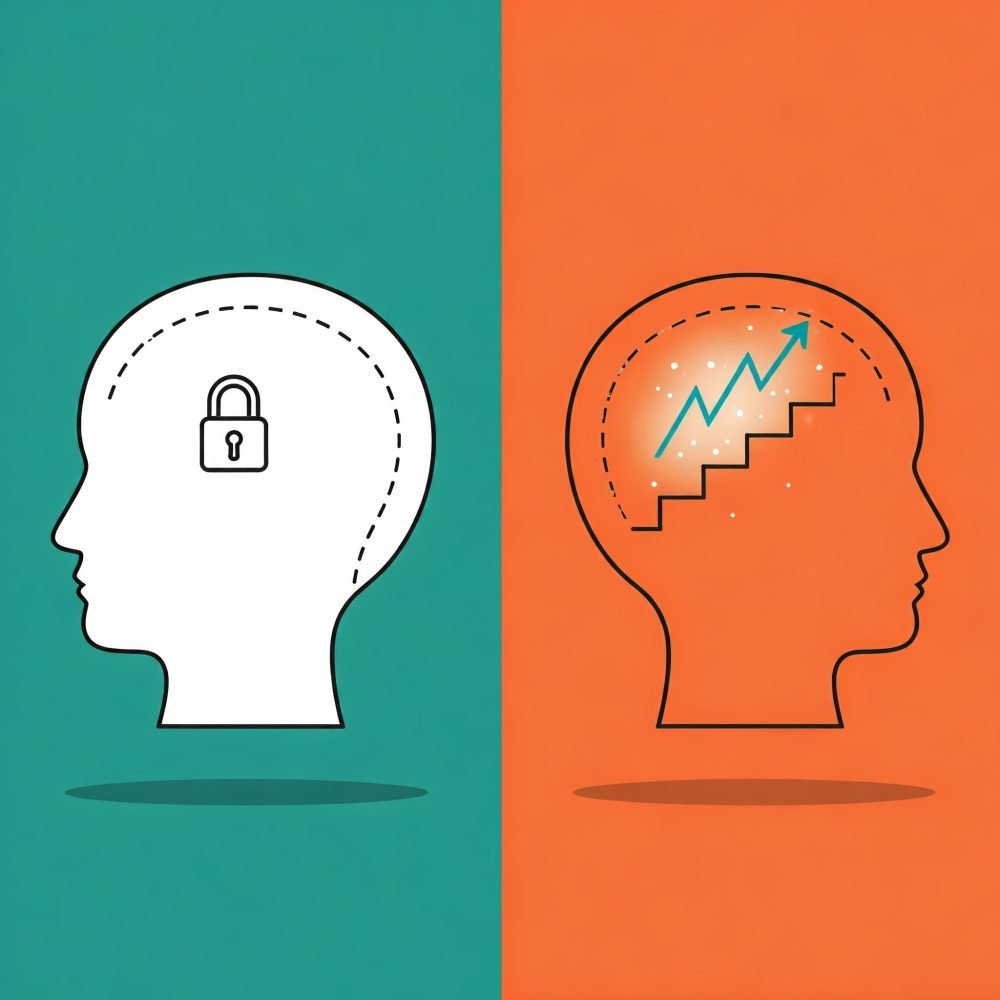
Are you tired of not progressing in life? Are others gradually passing you by, making you feel insecure? Then you may need to understand the difference between a growth mindset and a fixed mindset.
Your mindset plays the biggest role in transforming your life. With a growth mindset, you can overcome challenges, make meaningful relationships, and lead a happy life.
With a fixed mindset, the complete opposite may happen. You will constantly feel down and continue to regret your life choices.
To shift your mindset for the better, you have to understand the difference between a growth mindset and a fixed mindset. In this article, we discuss these two concepts in detail so that you can transform your life and unleash your true potential.
What is a Growth Mindset?
Do you believe that you have limitless potential? Then we have good news for you. You have a growth mindset, which can transform your life. It’s not only about being productive; it’s about finding purpose and clarity in life.
Key Characteristics of a Growth Mindset
The concept of a growth mindset was first coined by psychologist Carol Dweck and her colleagues at Stanford University. While her study was primarily based on students, they later realized that growth mindset principles persist throughout life.
Cultivating a growth mindset enables a wide range of characteristics. You begin to perceive challenges as learning opportunities instead of a threat. Even in the face of setbacks, you don’t give up. You consider failures a step in the learning process.
You don’t shy away from seeking feedback. Instead, you use them for insight on how to better yourself. Finally, with a great mindset, you get inspired by others. Their success story guides you towards your personal development.
Benefits of Having a Growth Mindset
The benefits of having a growth mindset are numerous. With a growth mindset, you can adapt to any situation in life as you don’t believe that abilities are unchangeable. No matter how challenging things get, you always bounce back from failure.
You also love to take on new challenges. This increases your productivity. Another crucial benefit that many people tend to ignore is building stronger relationships.
You are open to various opinions and perspectives when you have a growth mindset. Therefore, you resonate with others on a personal and emotional level. Strong relationships can enhance your mental well-being and even progress in your career.
How Growth Mindset Impacts Learning
You seek to learn and grow when you feel you have the potential. If you believe that you have already achieved everything in life, you will never feel the urge to learn something new.
With a growth mindset, you believe that you can learn throughout your life. Because you are confident in yourself, you navigate through challenges to grasp something after overcoming all obstacles.
What is a Fixed Mindset?
A fixed mindset is the complete opposite of a growth mindset. With this mindset, you believe that your abilities are innate. You can’t develop any new skills or acquire any knowledge. You confine yourself in your safe zone, thinking you have already learned everything.
Understanding the Traits of a Fixed Mindset
An individual with a fixed mindset avoids challenges at all costs. To them, challenges are like threats that try to shift their self-perception.
They are also afraid of failure. In their mind, they constantly think about what people will say if they are met with setbacks. This leads them to have anxiety and panic attacks.
Finally, those having a fixed mindset feel threatened by others’ success. They feel jealous and can’t stand others achieving their goals. Rather than praising their achievements and learning from their journey, they keep saying their luck was a factor.
Consequences of a Fixed Mindset on Personal Development
When you have a fixed mindset, you get stuck in life. You think that there is nothing more for you to learn, so you only use the abilities and knowledge you already have. This mindset leads you to struggle in a competitive modern world.
When others start to leave you behind, it starts affecting your mental health. You feel down and think that you may never be able to achieve your goals, ending your dreams and ambitions.
How Fixed Mindset Affects Performance
Underperformance is normal. All successful people had to deal with mediocrity at some point. They failed miserably, but they didn’t let their setbacks define them. They kept on improving themselves. They learned new skills and acquired new knowledge, which led to improved performance.
Carol Dweck’s Research on Fixed Mindset vs Growth Mindset
Carol Dweck, a visionary psychologist, was one of the first individuals to use the term growth mindset. Her research on children’s performance in the classroom gave us insights into fixed mindset versus growth mindset. We realized the importance of a growth mindset and how a fixed mindset ruins our true potential.
Overview of Carol Dweck’s Findings
Carol Dweck and her colleagues conducted groundbreaking research on student performance. They found that some students performed exceptionally well while others did poorly. The reason behind their performance was how they perceived themselves.
Those who believed that they could always learn something new performed well, while those with a resentful attitude showed low performance. These findings revealed how a growth mindset helps individuals succeed in different aspects of life.
Impact of Mindsets on Learning and Achievement
Carol Dweck’s findings highlight that students with a growth mindset are curious. They constantly embrace challenges. Even when they are met with failure, they show persistence. When they perform poorly, they seek feedback and use the insight to recognize their shortcomings. The complete opposite happens with those fostering a fixed mindset. Their achievements are limited as they don’t seek to learn anything new.
Examples from Dweck’s Studies
Dweck’s studies demonstrated how incorporating growth mindset beliefs in individuals can affect academic performance.
A great example is how teachers may praise the students’ effort instead of their intelligence or results. This allows students to feel appreciated for their hard work, and they become more compelled to take on challenging tasks and constantly improve themselves.
Fixed Mindset vs Growth Mindset Activities
Shifting from a fixed mindset to a growth mindset can be the biggest stepping stone for personal development. However, this particular shift may be difficult, as people tend to resist any changes. However, engaging activities can foster a growth mindset.
Engaging Activities to Foster a Growth Mindset
One of the best activities for fostering a growth mindset is using the power of positive affirmations. Positive affirmations reinforce your belief in your abilities, and you become more empowered to develop yourself. Another way to foster a growth mindset is by keeping a journal. This way, you can reflect on your everyday experiences to find areas to improve yourself.
Examples of Fixed Mindset Activities
You will keep on limiting your potential by having a fixed mindset.
Imagine you have a great opportunity to learn and work as a research assistant for a science project. But instead of using the opportunity, you shy away from it. This kind of attitude can significantly hinder your growth.
Another example of fostering a fixed mindset can be how you may see positive feedback as a personal attack. Without constructive criticism, you will never know your weaknesses and find areas for improvement. So, you stay trapped without unleashing your true potential.
Comparative Analysis of Mindset Activities
You have to understand the difference between a fixed mindset and a growth mindset. The difference between a fixed and a growth mindset will allow you to identify which category you fall into. You can understand which of the activities help you cultivate a growth mindset and which push you towards having a fixed mindset.
How to Develop a Growth Mindset?
Developing a growth mindset requires dedication and time. You can’t expect to shift your mindset within a single day. You have to keep on practicing the principles of growth mindsets and integrate them into your routine for your personal development. Some practical steps may help to cultivate a growth mindset.
Practical Steps to Cultivate a Growth Mindset
One of the most important steps is to get out of your comfort zone. When you confine yourself to the things that you are used to, then you are not growing. If you think that you are the best and don’t need to gain any experience and knowledge, you will stay in the same place for the rest of your life. So, grab every opportunity and embrace challenges to learn new things.
Another step is to learn from mistakes. Many of us keep on making the same mistakes over and over again without reflecting on them. You have to analyze your failures and recognize why you are making them. Then you have to work on those areas for future endeavors.
Overcoming Challenges in Developing a Growth Mindset
Your existing beliefs will always be a hindrance to developing a growth mindset. Your mind will keep on telling you to give up. But you have to push to overcome these challenges.
Keep a journal to yourself and note down your everyday thoughts and experiences. This will provide insight into areas that are confining you to a fixed mindset. Then you can work on those areas to develop a growth mindset.
Another great growth mindset exercise to overcome challenges is to set realistic goals. When you overcome them, you will feel motivated and regain confidence in your abilities. You will gradually be more driven to embrace challenges.
Role of Self-Awareness in Mindset Development
If you don’t recognize your fixed mindset, you can’t get out of it. So, it’s crucial to identify fixed-mindset thoughts, perspectives, and patterns. By identifying them, you can work towards those areas to shift your mindset towards personal development.
Fixed Mindset vs Growth Mindset Examples
Looking at growth vs fixed mindset examples can be a great way to understand how having a particular mindset can impact your life. It can also help you recognize whether you have a growth mindset or a fixed mindset.
Real-Life Examples Illustrating Both Mindsets
Real-world scenarios can help realize the core difference between fixed and growth mindsets.
A great example of a growth mindset is the iconic figures who cultivated it to change their lives. J.K. Rowling, the author of the Harry Potter series, was rejected by every publishing house. But she didn’t give up. She kept on persisting in the face of her adversary. Now, she has become one of the best-selling authors of all time.
An example of a fixed mindset is how many individuals ruin their lives by fearing new experiences. Often, luck passes us by. A person with a fixed mindset shies away from every opportunity, which leads to them not progressing in life. In later stages, all they can do is regret their life choices.
Case Studies: Fixed vs Growth Mindset in Business
In the corporate world, companies that promote a fixed mindset may lead to a toxic environment where employees feel constantly threatened.
Businesses that promote a growth mindset make employees feel appreciated, leading to greater innovation and success.
Educational Examples of Mindset Differences
When a teacher has a growth mindset, they praise effort over results. They constantly explore different teaching strategies to adhere to each student’s needs. They encourage students to take risks and constantly embrace challenges.
On the other hand, teachers with a fixed mindset emphasize results over effort. This leads to decreased motivation among students, who give up easily in the face of challenges. That’s why teachers should help students realize why a growth mindset is important.
Fixed Mindset vs Growth Mindset for Students
What students learn in their classroom stays with them for the rest of their lives. That’s why it’s so important that they cultivate a growth mindset to apply the principles in the later stages of their lives.
How Mindsets Affect Academic Performance
Students with a growth mindset are always curious to learn new things. They constantly ask questions and seek feedback to better themselves.
People with a growth mindset believe that they can learn anything, so they are not afraid to embrace challenges. Even when they perform poorly, they utilize the failure to identify their mistakes and weaknesses and work on them.
Strategies to Foster a Growth Mindset in Education
Teachers must create a safe and positive environment where students can engage in meaningful conversations and learn from each other.
Rather than focusing on the outcome, teachers should focus on the efforts. When students make decisions, they should praise themselves. Teachers should also share stories of historical figures and their struggles, and how they overcame them. Then the students will become inclined to follow in their footsteps.
Examples of Growth Mindset Practices in Schools
One of the best examples of a growth mindset practice is self-reflection. Students can share each day about how they did something positive or overcame challenges in their lives. This will motivate others to foster a growth mindset.
With a growth mindset for teachers, educators can integrate the principles of a growth mindset after each lesson. They can have meaningful discussions with students about how the learning from each lesson can be applied to real life. Then, the students will not only learn but also practice these principles in their everyday lives.
Mixed Mindset: Understanding the Middle Ground
While we often prioritize a growth mindset, the best approach is to have a middle ground. There are certain situations where fostering a growth mindset can be better for you.
Characteristics of a Mixed Mindset
Your mind is highly adaptable. Therefore, you can switch from one mindset to another based on your needs. When you have a mixed mindset, you believe that your abilities can be developed through effort and time. But also, you have confidence in your existing abilities.
With a mixed mindset, you constantly improve yourself. You can also become more comfortable with your routine. As you have confidence in your abilities, you can make quick decisions and have less self-doubt.
Implications of a Mixed Mindset in Learning
A mixed mindset can be a great asset in certain situations. For learning, your mixed mindset increases your confidence in your current knowledge. This helps you make quick and informed decisions while also seeking new angles and perspectives.
How to Transition from Mixed to Growth Mindset
You must be consistent to shift from a mixed to a growth mindset. Your brain is malleable. As you learn something new, neurons get created, restricting your entire neural pathway.
This allows you to get accustomed to a new situation or skill. So, when you face challenges to adapt to a new situation or learn a new skill, stay persistent. Your brain will gradually get hardwired, making it easy for you to learn new things.
Do I Have a Fixed or Growth Mindset?
Many struggle to grasp the concept of a growth mindset because they can’t identify which one they fall into. Assessing your mindset is crucial, as you can then work accordingly. There are some self-assessment tools and quizzes that can help you identify a growth and fixed mindset.
Self-Assessment Tools and Quizzes
One of the greatest self-assessment tools is journaling. Note down your every experience and thought, and then try to find a pattern in them. You will recognize whether you have a growth mindset or a fixed mindset.
You can also take surveys and quizzes. Most of these are now online, so you can identify your mindset just by clicking on some options.
Another great way to self-assess is by seeking feedback. Ask your teachers, peers, and friends about your mindset and compare their answers. If most of them say that you have a growth mindset, there is a good possibility that it’s true.
Signs of a Fixed Mindset
When you have a fixed mindset, you avoid challenges. You see them as a threat. You constantly think about what others will think of you.
You have a high perception of yourself and think that you don’t need to learn anything. This leads to decreased productivity and growth in every sector of your life.
You struggle to maintain healthy relationships because you don’t consider others’ opinions and feedback. Conflicts often arise that can lead to the end of relationships.
Signs of a Growth Mindset
When you have a growth mindset, you constantly embrace challenges. You consider them a learning opportunity. Even when you fail, you don’t give up. You constantly look for opportunities to better yourself.
As you consider other opinions and feedback, others feel comfortable talking to you. They can share their thoughts and opinions with you, leading to stronger bonds.
Can You Change from a Fixed Mindset to a Growth Mindset?
It’s our human tendency to resist change. So, initially, you may struggle to change from having a fixed mindset to a growth mindset. But with consistency and determination, you will be able to make the jump and transform your life.
Steps to Transition to a Growth Mindset
The first step is to recognize that you have a fixed mindset. Without realizing it, you will never be able to shift your mindset. So, reflect on your thoughts, behaviors, and perspectives and analyze them.
After determining that you have a fixed mindset, you have to start reframing your thoughts and beliefs. Rather than believing that your abilities are innate, you must start believing that you can develop your intelligence and talent over time and effort. Also, you have to shift your perspective on challenges and failures. Rather than perceiving them as threats, you have to think of them as learning opportunities.
Finally, you must be devoted to shifting your mindset and commit to lifelong learning and continuous self-improvement.
Challenges in Changing Mindsets
Your existing beliefs will try to negate the principles of a growth mindset. But you have to persist. Initially, you may struggle. But with techniques such as positive affirmations, visualization, and meditation, you can slowly break out of your mold. You can also practice journaling and seek motivation from others who have overcome these life challenges.
Success Stories of Mindset Transformation
If you look around you, you will see tons of growth mindset examples.
In the workplace, you will notice that there is a person who has suddenly skyrocketed their productivity. They are now constantly looking for collaboration and seeking feedback. They are learning new skills and embracing challenges. This person has shifted their mindset toward achieving their growth mindset goals in the workplace.
The same can be said for the student who struggled initially but later improved drastically. With the power of a growth mindset, teens managed to find their weaknesses and work on them. Their resilience and hard work significantly improved their academic performance.
Growth Mindset vs Fixed Mindset Brain: How They Differ
The root of the growth mindset is a fascinating concept known as neuroplasticity. It refers to the extraordinary power of the brain to adapt to new experiences.
Neurological Differences in Mindsets
With a growth mindset, you constantly seek to learn new things and put yourself in new situations. When you try to learn something new, neurons spark in your brain. This leads to the creation of new neurological pathways and a complete rewriting of your brain. When this happens, your brain gets more accustomed to that particular knowledge or experience, making it easier for you to learn. A growth mindset can help expand your brain, unleashing its true potential.
On the other hand, with a fixed mindset, you don’t embrace challenges or learn new things. So, your brain doesn’t adapt. New neurological pathways don’t form, making it difficult for you to learn new things. Having a fixed mindset limits the true power of your brain.
How Mindsets Influence Brain Development
A growth mindset pushes your brain to reach its true potential. As you constantly push yourself out of your comfort zone, your brain keeps getting rewired. Neurons spark, and your brain becomes more and more malleable. This increases your cognitive abilities and learning capacity tremendously.
Implications for Learning and Resilience
In the initial stages, we always struggle to learn something new. In new situations, we feel like giving up. But neurons form, rewiring your brain when you show resistance and keep persisting. As your brain expands, things start to get easier. So, there is a huge connection between brain plasticity, learning, and resilience.
Growth Mindset vs Fixed Mindset: Pros and Cons
The growth mindset allows you to become limitless, while the fixed mindset limits your potential. One can be your biggest secret to transforming your life, while the other can be the biggest hindrance to your personal development.
Advantages of a Growth Mindset
When you have a growth mindset, you stay curious, constantly seek new knowledge and skills, and don’t confine yourself to the safe zone. You take risks, solve problems using different approaches, and enhance your creativity.
With a growth mindset for leaders, you are always open to communication and collaboration. This leads you to make meaningful relationships that last forever. The most important advantage of a growth mindset is that you find fulfillment in your life. You don’t have any regrets.
Disadvantages of a Fixed Mindset
When you have a growth mindset, you shy away from opportunities. You fear failure, which hinders your personal and professional growth.
As you constantly think about how others may perceive you, you can’t maintain a healthy life. You are constantly plagued with stress and anxiety. You can’t form meaningful relationships as you only consider your options while negating others.
Balancing Both Mindsets in Real Life
While a growth mindset is beneficial, there are always situations where you need a fixed mindset as well. For example, you need to make a quick decision. Your growth mindset for adults may propel you to take time navigating different approaches.
But with a fixed mindset, you can quickly decide based on your beliefs and experiences. So, you should always balance both mindsets in life according to the situation.
Final Thoughts
Understanding the difference between a growth mindset and a fixed mindset is the most important step toward development. This allows you to identify your current mindset and gives you insight into areas for improvement.
When you realize the difference, you can start to open your mindset or foster a growth mindset more diligently. If you manage to do this, you will be able to increase your cognitive abilities and emotional intelligence and, most importantly, live a happy life.