
Imagine you are assigned a difficult task that requires you to step out of your comfort zone and expertise. Would you give up, thinking it’s impossible, or would you take on the challenge, believing that it can be achieved with effort, hard work, and resilience?
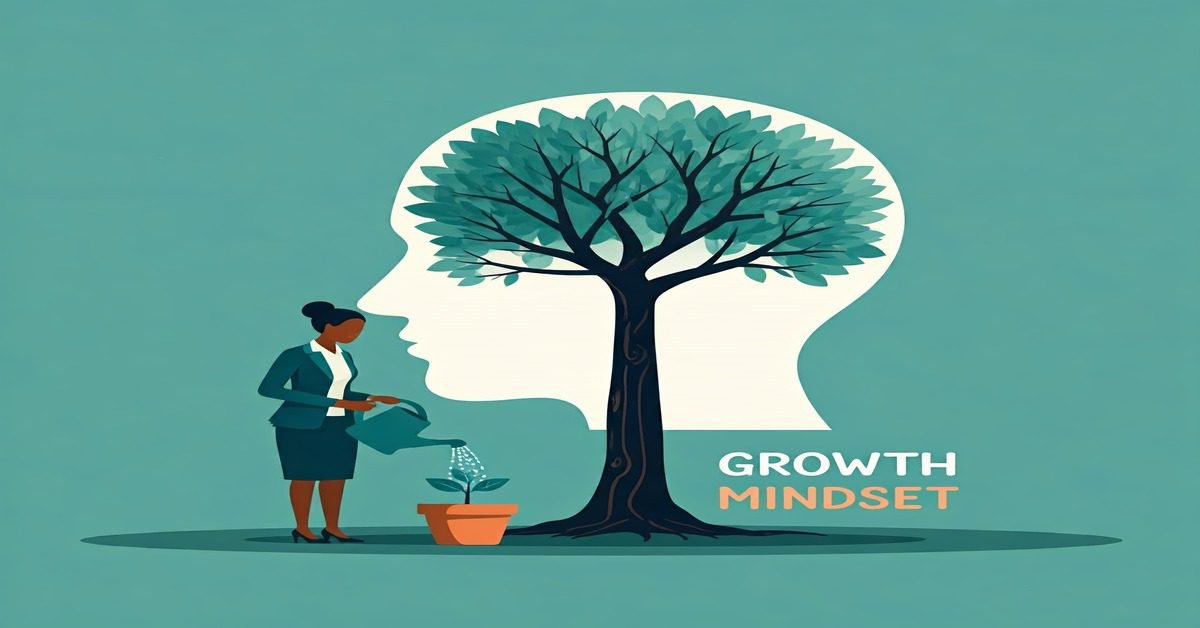
If you think giving up is the better choice, you may be lacking what’s called a growth mindset. So, what is a growth mindset? People with a growth mindset believe that their abilities can be developed over time. They see challenges as opportunities for self-improvement rather than obstacles to their growth.
Having a growth mindset is like possessing a superpower, as it makes your potential limitless. You continuously strive to improve yourself, understanding that it’s not the outcome that matters, but the journey itself. That’s exactly what a growth mindset is.
What Is Growth Mindset?
So, what is a growth mindset about? Let’s dive deep into it.
Great accomplishments don’t happen simply because the achiever possesses inherent or innate genius. They result from dedication and perseverance. Even when faced with failure, successful individuals learn from their mistakes and continue to work harder, seeking new strategies along the way. This is what it means to have a growth mindset, which is the polar opposite of what’s called a fixed mindset.
Defining growth and fixed mindset
The most significant difference between these two mindsets is the word “yet”. If you say “I can’t do it,” then you will never be able to do it. You have accepted that your incapability is permanent and there is no other way around it. This is what’s called a fixed mindset. In this mindset, you are completely set on the outcome. You believe your abilities are by birth and you can’t improve them.
If you say, “I can’t do it yet,” then you are not letting your inability to do something define you. Instead, you try to achieve it by learning, putting in effort, and finding the right strategy. Your efforts and embracing your weaknesses help you achieve success. This is the power of yet.
American psychologist Carol Dweck discovered the power of growth mindset exercises while working on students’ attitudes to failure.
Carol Dweck’s Contributions to Mindset Theory
Stanford psychologist Carol Dweck conceptualized a growth mindset in her 2006 book “Mindset: The New Psychology of Success”. She studied thousands of students and noticed how some of them rebounded to failure while others became devastated. Students who believed they could improve themselves showcased exceptional learning and a certain amount of intelligence.
Dweck and colleagues coined this attitude or belief as a growth mindset. Dweck’s research helped us understand how stretching yourself in the face of a challenge is the mark of having a growth mindset. Her work laid the base for understanding what mindset growth is. Such a mindset makes you thrive even on your most challenging days. It helps you learn and develop your brain mindset to become more malleable in every situation.
How Mindsets Influence Learning and Development
People with a fixed mindset believe that learning is an innate activity. They may say, “That’s the way I am”. Individuals with this mindset focus on proving their existing abilities and intelligence rather than improving them. That’s why they don’t embrace challenges to learn something new.
If you have a growth mindset, you believe your learning ability is not limited or fixed. It’s rather malleable that you can achieve with time and effort. You see challenges, setbacks, and negative thoughts as opportunities to learn. Individuals with such mindsets are stronger, more resilient, and excellent problem solvers. So, as you can see, brain mindsets and achievements can be the sole difference between “learning is not for me” and “there is so much to learn”.
How Can You Develop a Growth Mindset?
You may be thinking in your mind, “How to develop a growth mindset”. Well, developing a growth mindset isn’t like flipping a switch with an on/off button. You have to change your thoughts, beliefs, and perceptions meaningfully. Rather than thinking about what you are, you have to think about what you can be. This belief can motivate you to put in more effort, be resilient, and learn new things. That’s why it’s essential to know what growth mindset strategies are to become more motivated and resilient.
Strategies to Cultivate a Growth Mindset
Cultivating a growth mindset requires practice and reflection. While it’s not achievable in a single day, some strategies can help you develop a growth mindset with time and effort. One of the very first steps is to identify your weaknesses. If you think you have no limitations, you are the furthest from a growth mindset. That’s why you need to identify and accept your weaknesses and then gradually work on them by looking for challenges and seeking feedback every step of the journey.
How to Use Setbacks as Learning Opportunities?
Setbacks are part of the process. While they may leave you feeling demotivated, they are great opportunities to figure out what went wrong. A person with a growth mindset only sees setbacks as transitory phases for their personal growth. Here are 3 ways you can use setbacks as learning opportunities as well:
-
Accept Your Weaknesses
The very first step is to accept that there is room for improvement. If you don’t accept your weaknesses, you will never try to improve yourself. Try to notice your habits, decisions, and strategies that led to the setback. Find out what’s lacking in them.
-
Seek Feedback
We often act harshly towards criticism. While some of them can be vague and rude, most of them provide value to you. That’s why you should always seek feedback when you are met with setbacks. Ask what you did wrong and what you could’ve done better.
-
Set Realistic Goals
There always has to be a fine balance between optimism and realism when it comes to setting goals. If you aim for something unrealistic, you will most likely fail and get emotionally devastated. The rule of thumb is to be optimistic, but assess your goals based on how likely you are to reach a positive outcome. This helps you build resilience and not overwhelm your emotions.
Mindset Interventions for Personal Growth
Mindset interventions are a set of growth mindset strategies and efforts to shift a person’s fixed mindset to a growth mindset. These interventions help you reflect, be aware, and better your current abilities through techniques such as attending group workshop sessions, positive affirmations, or as simple as encouraging yourself to learn something new.
Mindset interventions are crucial if you continuously find yourself confined by the traits of a fixed mindset. These strategies can help you improve your perception and push you towards personal growth.
Strategies for Cultivating a Growth Mindset
While we already touched on how certain strategies can help you cultivate a growth mindset, we talk about each of the strategies in depth in this section. Without a certain roadmap, it’s easy to get completely lost and overwhelmed in your pursuit of developing a growth mindset. That’s why having strategies is crucial.
What mindset interventions are effective for cultivating a growth mindset?
Here are 5 great mindset interventions that will help you develop a growth mindset for improving your personal and professional life.
-
Embrace Your Fear and Anxiety
So many of us can’t do the things we desire because of fear. Fear of people watching us failing. What’s the worst that can happen when people watch us fail? Maybe they will laugh, but take it with a grain of salt. Soon they will forget about it. But the guilt of not doing what you wanted will always sting you. So, embrace your failures and put yourself out there. You may surprise yourself with what you achieve!
-
Always look for challenges
A great way to foster a growth mindset is by embracing challenges. Challenges aren’t roadblocks; they are opportunities to learn and grow. Even when the outcome isn’t satisfactory, the knowledge, skills, and strategies you will gain along the way are invaluable.
-
Surround yourself with growth-minded people
Your surroundings play an important role in who you are. When you surround yourself with people with a growth mindset, you can learn from them. Your cam gets inspired by their journey, how they take up challenges, and what they do when they meet failure.
-
Get inspired by others’ success
We often feel jealous of others’ success. Sometimes, even question why they have success when you can’t. Having this type of mindset will only take you to a dark state of mind where you will constantly seek to invalidate others’ success and achievements and never grow yourself. Rather than reprimanding others’ success, you can get inspired by them. Observe how they reached success and what their plan and strategy were.
-
Reflect On Your Actions
Your past actions give you a lot of insights and teachings on not making the same mistakes in the future. That’s why it’s important to think once in a while about previous actions and, if possible, make notes of them on paper.
How can persistence aid in maintaining a growth mindset?
Persistence even in the face of failure is one of the key characteristics of having a growth mindset. Failure is inevitable. But not giving up and continuing to put in effort despite facing failure is the sign of a growth mindset. This mentality can help you think that anything is possible with proper effort.
Before the success of the Harry Potter series, J.K. Rowling faced several rejections. Some publishers thought that the series would never see the light of day. But her persistence paid off, and Harry Potter became the most recognized series in the world.
Can adopting a growth mindset change your approach to challenges?
Without a growth mindset, you see failures as ultimate convictions. You think that it’s better to give up rather than persist. This is where having a growth mindset can help you.
When you have a growth mindset, you perceive challenges as learning goals. You may not achieve success, but you gain new skills and experience, which is always a win for you. Instead of contemplating your failure, you start to seek feedback and recognize what went wrong. Finally, you adapt yourself both emotionally and intellectually to solve the problem with a different approach. With increased motivation and better emotional stability, you turn challenges into milestones for your growth.
Growth Mindset Activities
As you have already learned about the strategies to cultivate a growth mindset, it’s time to practice some growth mindset activities. Achieving a growth mindset isn’t the end. You need to be consistent to preserve your belief and mentality. This is where growth mindset activities can help.
Activities to encourage growth mindset thinking
One of the most important activities is to nurture your belief that you can always learn new things. Understanding the concept of neuroplasticity is a start, as it can affirm how your brain can form new connections. Another great activity to encourage growth mindset thinking is through reflective journaling. Always keep a small diary with you. Take bullet notes when you are faced with a challenge and whenever you fail to do a task.
At the end of each day or week, you can reflect on the bullets you wrote and reflect on how you could’ve done things better. You will slowly start to see every challenge and failure as an opportunity to better yourself.
Importance of consistent practice in cultivating a growth mindset
Consistent practice can greatly help in cultivating a growth mindset. Just like any other skill, a growth mindset requires consistent effort. The more challenges you engage in, the stronger your mindset will get.
You have to believe that you can continuously improve yourself through learning and adaptation. If you are consistent with yourself and able to make each of the growth mindset traits a habit, then it will be easy for you to both cultivate and maintain a growth mindset.
Why Is Growth Mindset Important?
The importance of a growth mindset is enormous. When you have it, you see nothing as a challenge anymore. You perceive challenges as learning opportunities. With this brain mindset, nothing seems unattainable to you anymore. Effort, resilience, and a desire to learn can solve any of your problems. Just with your growth mindset, you become a superhuman.
How does having a growth mindset impact personal development?
With a growth mindset, you have a continuous learning approach towards personal development. Rather than thinking that your ability and intelligence are innate, you believe that these abilities are transformative.
You can develop them through sheer dedication and hard work. Rather than focusing on the outcome, you set goals and overcome failures for your development. Your willingness to grow acts as the key trigger for your self-development, which can also be linked with emotional intelligence and resilience.
Impact on Emotional Intelligence and Resilience
When you believe that your abilities are innate, you can’t handle setbacks. Even in the least challenging situations, you get emotionally overwhelmed. With the slightest criticism, you completely break down. You keep on thinking that you are only entitled to admiration.
An individual with a growth mindset doesn’t get overwhelmed emotionally and considers feedback as a learning opportunity. With a growth mindset, you are self-aware, leading to higher emotional intelligence. The same goes for resilience or the practice of recovering from challenges. If you have a growth mindset, you will not let failure define you. You will only consider it as a learning experience.
How a Growth Mindset Enhances Personal and Professional Life
When you focus on the journey rather than the outcome, you make better decisions both in your personal and professional life. You do everything with enthusiasm because you think that there is something new to learn in every aspect of life. While the start may not be as fruitful, you get better as you progress.
In your personal life, you can enhance your relationships with a growth mindset. You connect with other people emotionally. When you learn something new, you feel a sense of fulfillment. You consider your life to be meaningful and have a definite purpose.
In a professional setting, a person with a growth mindset loves to collaborate and take on challenges. These lead to more success in their career and satisfaction in their job. Overall, a growth mindset can increase the quality of life no matter what the setting is.
What are the Benefits of a Growth Mindset?
So, what does a growth mindset do? A growth mindset helps you develop resilience, emotional intelligence, and learning in both personal and professional life. You start to form meaningful relationships, have better job satisfaction, and solve difficult problems over time.
Growth Mindset Benefits for Learning and Performance
Imagine you are constantly thinking that there is nothing for you to learn. You don’t take any challenges or attempt to improve yourself. With such a mindset, you may never be able to learn anything or improve your performance.
But with a growth mindset, you embrace challenges, attempt to learn new things, seek feedback, and collaborate. These traits help you improve your learning tremendously, leading to increased performance. Let’s take a look at some real-life examples of how a growth mindset can transform a person’s life.
Examples of Growth Mindset in Action
It is natural to think that a successful person is born a genius. But in most cases, success isn’t achieved through someone’s innate or inborn ability or intelligence. It’s rather achieved through their exceptional effort and resilience. There are so many real-life examples of individuals who faced failure after failure but didn’t give up. They persevered and ultimately succeeded.
Real-Life Success Stories
Here are 2 successful individuals who reached their full potential by having a growth mindset. Their stories can work as an inspiration for your self-growth.
Thomas Edison
Edison’s journey toward inventing the light bulb was full of setbacks, but he didn’t let failure define him. He found a thousand different ways that didn’t work to ultimately narrow down to one particular way that worked. His resilience is a perfect example of what a growth mindset can achieve.
Michael Jordan
He is often regarded as the greatest basketball player of all time, but did you know he was cut from his high school team? What if he had just given up after seeing this failure? We wouldn’t have been able to witness those legendary dribbles and dunk shots. His motivation and commitment to improving himself are the reasons why he is the greatest of all time.
Growth Mindset in Education: Lower-Achieving Students
Another shining example of a growth mindset in action is its impact on education, particularly lower-achieving students. In every classroom, there will be students who struggle. That’s mainly because they think that they can never improve their performance.
With the proper class environment and encouragement, they will gain confidence in themselves. A growth mindset is essential for making them more interested in learning, leading to increased performance compared to their low achievement due to living with a growth mindset.
What is a Fixed Mindset?
A fixed mindset is the belief that your abilities and intelligence can’t be improved over time and effort. You are only stuck with what you have. As you believe that improvement isn’t possible, you don’t challenge yourself. Having characteristics of a fixed mindset can hamper your personal growth significantly.
Characteristics of a Fixed Mindset
Here are 4 signs that you may have a fixed mindset.
- Straying away from challenges: If you have a fixed mindset, you will shy away from challenges, fearing setbacks and criticisms.
- Giving up easily: You will give up even before trying. When something requires you to get outside of your comfort zone, you will think that it’s never achievable because you lack the skill and expertise.
- Failure to receive criticism: You will always take criticism negatively, rather than view it as a means for personal growth.
- Not aware of weaknesses: If you have a fixed mindset, you will continuously think you are special. You will never accept your shortcomings.
How a Fixed Mindset Affects Personal Growth
Having a fixed mindset is the primary obstacle to your personal growth in both personal and professional life. As you avoid challenging situations, you miss all the opportunities for growth and learning. Your fear of setbacks hampers your resilience. So, when you face failure, you completely break down emotionally. Your fixed mindset also leads to lower achievement because you never try to exceed your potential.
Examples of Fixed Mindset Thinking
There are always certain thoughts and actions that revolve in your brain, compelling you to either do something or stay away from it. Thoughts like “I’ll never be able to do this” or “I’m not good at this” are precursors of a fixed mindset. These beliefs stop you from putting in effort and growing yourself.
What are the Differences Between a Growth Mindset and a Fixed Mindset?
For personal growth, it’s crucial to find the difference between a growth mindset and a fixed mindset. Without being able to differentiate between these two mindsets, you will never know which one you fall under.
Growth Mindset vs Fixed Mindset: Key Differences
Let’s dive deeper into growth mindset vs fixed mindset by understanding their key differences.
- Approaches to Challenges: Individuals with a growth mindset are more open to challenges. They believe that putting themselves out of their comfort zone can provide them with knowledge and skills. Individuals with a fixed mindset avoid challenges, fearing the outcome. They feel that they are adequate and don’t need to learn anything else.
- Effort: A growth mindset allows you to pour more effort into each of your tasks. You start to believe that hard work is the key to success. A fixed mindset gives you the impression that if something is hard to do, you are not good at it. You should rather give up.
- Feedback and Criticism: You will welcome feedback when you have a growth mindset. It’s because it helps you grow. However, you will get defensive when you have a fixed mindset and often consider feedback as a personal attack.
- Primary Focus: Individuals with a growth mindset focus on the journey, whereas people with a fixed mindset only care about the results. That’s why they get devastated when they don’t succeed or fail.
How to Change Mindsets for Personal and Professional Growth
If you have had a fixed mindset for a long time, changing it to a growth mindset requires some initiative on your part. The very first step is to identify that you have a fixed mindset.
Then you need to embrace challenges and perceive failure as a lesson to be learned. Develop a love and passion for learning. You will make many mistakes, but always learn from them by looking back and seeking feedback. Keep your surroundings full of people who foster a growth mindset. Lastly, be kind to yourself in the face of failure. Self-appreciation helps you stay consistent in your path toward achieving personal and professional growth.
Remember that everyone experiences setbacks, and it’s nothing to be ashamed about. If you struggle, positive affirmations can help you reinforce a growth mindset.
What are Some Positive Affirmations to Promote a Growth Mindset?
Negative thoughts will arise, making you doubt your abilities. It’s completely natural. But there is a simple way to convert those negative thoughts into positive energy, encouraging self-belief and resilience. It’s called positive affirmations. These simple statements act as powerful tools for promoting a growth mindset.
Examples of positive affirmations for growth
Quotes and statements such as “I can do it” or “Failure is only part of the process” go a long way toward making you feel motivated to learn new things. When you think about these affirmations in your mind, your negative thoughts start to fade away. You become more focused and have a positive outlook on life.
How Affirmations Reinforce a Growth Mindset
With positive affirmations, your thoughts start to get reframed. You start to look at things in a much more positive light. Positive affirmations can increase confidence in yourself. Before doing something challenging, they can give you the motivation to never give up. If you repeat the affirmations regularly, you will start to notice a drastic change in your thought patterns, habits, and behaviors over time, leading to a growth mindset.
What are Mindset Exercises to Develop a Growth Mindset?
Mindset exercises are activities that help you develop a growth mindset. While these exercises may be less similar for everyone, they can vary depending on age or profession.
Effective Mindset Exercises for Adults
One of the most common misconceptions is that human growth stops during adulthood. That’s not the case. When you have a growth mindset, you can keep on developing your abilities and intelligence. Here are 3 effective mindset exercises for adults.
- Reflective journaling: We have a natural tendency to forget things. That’s why it’s important to document your experience. Then, you will be able to reflect on your past mistakes as you search for opportunities to grow.
- Positive Affirmations: Affirmations such as “I can still do it” instead of “I’ve never been good” go a long way toward making you feel confident about your abilities.
- Mindfulness: Life can get quite stressful. Amidst such chaos, it can be difficult to stay optimistic. Practicing mindfulness, such as taking deep breaths or meditating, can calm you and help you develop a growth mindset.
Mindset Interventions to Cultivate Resilience
Cultivating resilience is one of the key challenges of developing a growth mindset. The constant fear of failure makes all of us struggle to stay motivated. But there are some mindset interventions you can try:
-
Resilience Training Programs:
One of the most wonderful aspects of today’s generation is their willingness to help other people. There are thousands of training programs that teach coping strategies and stress management. Attending those programs can help you face setbacks better.
-
Sharing Experience:
Whenever something bad happens to us, we think, “Why us?” We start to assume that we are one of the unluckiest people on the planet. But that’s not the case. There are many people out there who have faced challenges and overcome them with their sheer resilience. Listening to their story and experiences can inspire you to grow your mindset.
How Can a Growth Mindset Benefit Teenagers?
The teenage years are the perfect time for cultivating a growth mindset. This is the period when individuals are the most eager to learn things naturally. Teenage growth mindset can help them achieve improved grades, better emotional regulation, and amazing problem-solving skills. Once they cultivate a growth mindset, it stays with them for a long time. That’s why encouraging them is necessary.
Encouraging a Growth Mindset in Students
The first step is to tell the students what their brains can do. Teaching concepts such as neuroplasticity can help them realize the capability of their brain. Then, you should encourage them to listen more than talk. By listening and seeking feedback, they can get inspired to do better. Finally, you need to make them realize that failure is completely okay. Once they get a good grasp of these concepts, they will start to be more willing to learn new things.
Growth Mindset Goals for Teenagers
A common mistake that parents and teachers make is setting unrealistic expectations for teenagers. As these goals are not achievable, teenagers get devastated trying to reach them. That’s why the goals should be assessed properly before being out to teenagers. Also, they should not be pressured. Giving too much pressure can lead to stress and feelings of inadequacy.
Overcoming Setbacks with a Growth Mindset
Teenagers can be highly emotional. When they face challenges, they can easily get overwhelmed. That’s why they should always seek help from peers, teachers, and their parents when they are facing challenges. Also, they should learn how to organize their thoughts. Even when their brain gets contaminated with negative thoughts, they have to keep on saying “I won’t give up yet”.
How Can Teachers Foster a Growth Mindset in Students?
Good teachers make good students. A teacher practices and encourages a student to develop their growth mindset. But they also need to be very careful, as the students can be emotional. Teachers can’t expect them to behave like adults. They need to teach the students with care and affection without pressuring them. That’s the key to achieving a growth mindset in students.
Effective Growth Mindset Activities for the Classroom
Oftentimes, students believe successful people to be miraculously gifted. This belief leads to them having a fixed mindset. That’s why it’s important to tell stories of their failures to make them realize that all of their greatest accomplishments were accompanied by setbacks. The story of King Bruce and how he was defeated 6 consecutive times is a great example. Students can learn that perseverance is the key to success.
Also, teachers must support the students’ efforts rather than praise intelligence or talent. Then they will be more motivated to learn new things and get smarter.
Supporting Lower-Achieving Students with a Growth Mindset
Not everyone in the classroom will have the motivation to grow themselves. For such low-achieving students, teachers have to tailor their learning experiences. With targeted interventions and engaging with them at their level, the students can gain more confidence.
Also, teachers need to regularly monitor the progress of lower-achieving students. After each lesson, they should ask for the student’s feedback if they have understood the concept or not. Through these targeted approaches, even lower-achieving students can develop a growth mindset that can enable them to perform better in the classroom.
Adopting a Growth Mindset Approach in Teaching
Classrooms nowadays are places that feel more like jails where both students and teachers try to break out as soon as possible. But that’s not how it should be. It should be a free place where both students and teachers can share their thoughts, emotions, and learn new things. To make this feasible, teachers should adopt a growth mindset in teaching.
Creating a safe learning environment or promoting collaborative learning can go a long way in making students feel included. Also, whenever students try something new, the teachers should motivate them. When they make a mistake, they should provide constructive criticism. Teachers can also share their stories and life experiences, which the students can learn and employ in their lives.
How Can Leaders Foster a Growth Mindset in Their Teams?
A business team that lacks a growth mindset will ultimately have a hard time achieving success. One of the key responsibilities of any leader is to foster a growth mindset in their team so that each member works together to achieve desired goals. With a growth mindset for leaders, they can maximize the productivity of each employee, leading to achieving the team’s mission and vision.
Strategies for Leaders to Encourage a Growth Mindset
While leaders often try different tactics to improve productivity in the team, they often backfire. So, here are 3 strategies to encourage a growth mindset:
1. Ensuring A positive work environment:
Most work environments are incredibly toxic. Colleagues often talk behind each other, and no one helps one another. The leader must ensure that the workplace is safe and positive for each member of the team.
2. Embrace Failure:
Many leaders often get angry when the team fails to do something. They have unrealistic expectations that the team members struggle to achieve. Such an attitude is a recipe for disaster. Rather, leaders should encourage team members to build resilience and not get bothered by failure.
3. Encourage Collaboration:
Collaboration is the key to success in every business. But it’s only possible when each of the team members is willing to share their thoughts and opinions freely. The responsibility of the leader is to ensure that team members don’t feel shy to express their views. They need to make sure each of the members’ voices is heard.
Business Growth Mindset: Impact on Organizational Success
A business growth mindset can significantly improve the success rate of your organization. Here are some ways it can impact your business.
1. Prompts Innovation:
Business teams with the right mindset aren’t afraid to experience and take risks. Such risks often lead to innovative solutions to a key problem that can drive the organization forward.
2. Job satisfaction:
A business growth mindset fosters an environment where every employee feels completely satisfied with their job. When they’re satisfied, they work harder, leading to more success.
3. Adaptability:
Businesses that promote a growth mindset can stand tall even amidst challenging times. As they have a positive outlook, they can easily manage to bounce back with their resilience.
4. Clear Vision:
Organizations have a clear vision when they foster a growth mindset. Rather than working aimlessly, each of the team members knows their roles and responsibilities, which culminates in more business growth.
How Does a Growth Mindset Impact Adults in Business?
Handling a business isn’t easy, whether you are an employer or an employee. Studies indicate that nearly 95 percent of businesses fail. Therefore, it’s always anxious to handle business, having a constant fear of failure.
But this anxiousness can be reduced by having a growth mindset. Many consider that adults can’t stretch themselves to foster a growth mindset. But that’s not true. With proper strategies and willingness, a growth mindset for adults can be achieved to thrive in business.
Adopting a Business Growth Mindset
Here are 3 great ways to adopt a business growth mindset:
1. Encourage Curiosity:
One of the main reasons why companies fail is that adults don’t have any curiosity about them. They don’t ask questions and fear innovation. Staying in the same mindset and practicing the same old approaches can only lead to more failures. Curiosity can be a driving force that sparks innovation and improves your problem-solving skills.
2. Value and Reward Progress:
We are so driven towards success that we never look at the tiny progress we make along the way. Without valuing progress, the entire journey toward success can feel exhausting. Even when your project succeeds, you will not feel motivated to work hard towards the next one. That’s why you should always value and reward progress.
3. Seek Guidance:
You may feel insecure as an adult to seek guidance. Many of us think that it’s better to fail than ask for someone’s help. But having such a mindset will only push you towards misery.
That’s why you need to seek guidance when you are faced with a challenge. Your colleagues or business partners can provide valuable insights that you can use to your advantage.
Transforming Challenges into Opportunities
When we are met with a challenge, we feel stressed. We continuously think that there is no way out of this, and the business is going to fail. But when you have a growth mindset, you see challenges as opportunities. You are better equipped to handle stress. Even during hardship, you see a silver lining in the situation. Such a mindset will flourish your business in the long run.
What are Practical Goals to Set for a Growth Mindset?
Being ambitious is a hallmark of a growth mindset. However, there should always be a fine line between ambition and practicality. If you aim for something unachievable, then you are most likely going to fail. Even with strong resilience, you will feel devastated when this happens. That’s why it’s crucial to set practical goals that push yourself while they are not completely unattainable.
Growth Mindset Goals for Personal Development
Taking things slow is the key to maintaining a growth mindset. Suppose you feel motivated to change yourself. From day one, you tell yourself that you are going to work ten times more than what you do now. If you set an aim for something unrealistic, you are going to fail, surely, and get emotional.
That’s why it’s always best to take things slow. Set small goals every day, such as learning 10 new words, talking to a new person, or even waking up early in the morning. Setting these small goals can uplift your confidence, and you will feel motivated to target an even higher future.
Business Growth Mindset: How to Set Professional Goals?
Fostering a business growth mindset requires a fantastic approach called SMART goals. SMART goals mean implementing specific, measurable, achievable, relevant, and time-bound goals for each project.
Instead of thinking that you will be more productive today, you should consider thinking that you will deliver a 15-minute presentation in front of 20 people today. See how specific, measurable, and time-bound it is. Also, they are relevant to your business, and most importantly, they aren’t impossible to accomplish. With effort, you can achieve it and feel more accomplished and confident.
Learning Strategies to Achieve Growth Mindset Goals
Here are 3 learning strategies you can implement that will help you achieve growth mindset goals:
1. Normalize Struggle:
Sometimes we consider struggling to be a weakness. We think that if we struggle, we may as well give up. But that’s not what a growth mindset is based on. It’s important to realize that it’s completely normal to struggle. Even those who you think have inborn genius struggle in the face of an adversary.
So, there is no reason for getting demotivated when you are struggling. Rather, every time you struggle, you should think that you are learning and getting close to achieving your goal.
2. Celebrating wins:
We are so occupied with the results that we often forget to celebrate the small wins. By celebrating, you feel appreciated for your hard work and dedication. These are important for achieving growth mindset goals.
3. Look for inspirations:
When you are struggling, look for inspiration in people who have already achieved the goals you’ve set. Ask them what strategies they used to achieve them. Learning about their mistakes and achievements can help you plan your goals systematically.
What is the Role of Emotional Intelligence in a Growth Mindset?
Imagine you are tasked with an important project. Even after you worked exceptionally hard, you failed to complete the task. It’s obvious to feel completely devastated when such a scenario happens. You get emotional and start to blame yourself to the point where there is no escape.
When you have a growth mindset, you handle your emotions much better. As you are self-aware, you know about your strengths and weaknesses and realize that there is always room for growth. So, rather than getting emotional and blaming your luck, you view the entire experience as a learning opportunity. Therefore, you don’t get stressed when something doesn’t go smoothly. This is how a growth mindset can help you manage your emotions.
Link Between Emotional Intelligence and Growth Mindset
Our emotion is directly based on belief and thought. When you believe that anything is achievable with effort, you handle your emotional competencies in a better way. You perceive failure as an opportunity and feedback as guidance. When your beliefs and thoughts are about improving yourself continuously, your emotions start to stabilize as well.
Cultivating Emotional Resilience through Growth Mindset
Emotional resilience means recovering emotionally from failures. This can be achieved when you cultivate a growth mindset. One of the key ways to develop emotional resilience is by having a positive outlook on life. Viewing challenges and failures as opposites for growth can be a great way to develop resilience.
When you have a growth mindset, you see setbacks as small victories toward a long-term goal. Therefore, even in failure, you don’t get emotionally devastated. Rather, you persist and maintain the effort to reach your devitalization.
What is the Importance of Resilience in a Growth Mindset?
Failures can be devastating when you don’t have a growth mindset. You will feel demotivated to work on anything else in the future. But when you have a growth mindset, you persist in the face of challenges, not caring about failure. When you have this mentality, you start to find solutions to every problem.
How Resilience Supports Personal Growth
As you develop the ability to recover quickly from failures, you start to view learning as an ongoing process. You begin to challenge yourself continuously. You learn new skills and take risks without fearing failure. With such resilience, you enhance your self-confidence and feel motivated toward your personal growth.
Overcoming Setbacks with a Growth Mindset
As a resilient individual with a growth mindset, you reframe every setback as a learning experience. Suppose you have a problem and you consistently encounter setbacks along the way. As you face more and more setbacks, you start to eliminate the approaches that lead to failure and narrow down on those that lead to success. That’s how you can turn setbacks and challenges into your strengths with a growth mindset.
How Does Neuroplasticity Relate to Mindset?
Neuroplasticity is an interesting concept about how your brain changes in response to stimuli. For example, when you learn a new skill, your brain starts to fire neurons in a new direction, leading to the creation of a new neurological pathway.
With a growth mindset, you consistently try to learn new things, compelling your brain to form new connections along the way. Therefore, a growth mindset can lead to an expansion in your brain, improving both your emotional and cognitive intelligence.
The Science Behind a Malleable Mindset
The concept of a malleable mindset stems from your belief that your emotional and intellectual abilities change over time. When you try to solve a unique problem or learn a new musical instrument, your brain forms new connections and nurtures the old ones.
Over time, your brain becomes more and more malleable, making it easier for you to embrace challenges. The more challenges you embrace, the more malleable your brain gets.
Neuroplasticity and Learning Strategies
When you confine yourself to the knowledge and skills you know, your brain doesn’t form new connections, leading to decreased neuroplasticity. But when you cultivate learning strategies that promote a growth mindset, your brain becomes more malleable.
Reflecting on your mistakes, seeking feedback, and putting yourself out of your comfort zone are some of the many learning strategies you can try to improve your neuroplasticity.
The Concept of Open Mindset
The term ‘open mindset’ is sometimes simultaneously used with a growth mindset. While both terms are related to self-development, there are some differences between them.
What Is An Open Mindset?
Having an open mindset means you are willing to consider new ideas and experience new things. You are curious to explore what the world has to offer. Rather than considering feedback as a personal attack, you welcome it. You aren’t unchangeable.
The entire concept of an open mindset stands on the notion of exploration. Rather than neglecting uncertainty, you embrace it. This mentality enables you to embrace challenges and learn about new views, opinions, or beliefs. But having an open mindset doesn’t necessarily mean that you practice each view or belief that you come across. You are receptive to all, but practice the ones that resonate with you.
The link between an open mindset and a growth mindset
A growth mindset focuses on the belief that your intelligence and ability can be improved with effort and resilience. An open mindset focuses on being receptive to diverse perspectives and experiences. To develop a growth mindset, cultivating an open mindset can be a great start.
With an open mindset, you are willing to observe other people’s experiences. By noticing their approaches or strategies, you can pinpoint the ones that may have less chance of leading to failure. Having an open mindset lets you explore different ideas and helps you find the ones that can solve the problems that you are struggling with.
Growth Mindset and Its Connection to Traits Related to Personal Growth
We have touched on what exactly a growth mindset is and how you can cultivate one towards developing your abilities and intelligence. However, we still haven’t touched on the traits related to personal growth that you can achieve when you have a growth mindset.
One of the most quintessential traits that you can achieve through a growth mindset is self-discipline. Self-discipline is the trait of being persistent until you reach your goal. A growth mindset allows you to view your failures as opportunities, compelling you not to give up. This attitude makes you more self-disciplined.
Another trait of personal growth is spirituality, which means having a belief that something is greater than yourself. One of the primary aspects of a growth mindset is to look beyond your innate abilities and look on the brighter side of every action. Therefore, cultivating a growth mindset helps you become spiritual, acknowledging that life isn’t just about success; there is something more.
Without a growth mindset, you constantly get emotionally devastated when things don’t go your way. This emotional distress and constant neglect of yourself can be detrimental to your health and well-being. Individuals with a growth mindset are less succumbed to emotional stress and are better equipped to handle challenging situations. Their practice of mindfulness further leads to them being both mentally and physically healthy.
Final Thoughts
A growth mindset isn’t just the key to your increased resilience or emotional intelligence. It’s the precursor to living a fulfilling life. When you see life as a continuous learning experience, you have a greater purpose in life. With greater purpose comes more satisfaction.
All of this cultivates into you making the best out of your life. Negative thoughts can no longer bother you, and no matter how problematic the situation is, you learn to find the solution. Having a growth mindset gives you the accomplishment in life that so many people cherish. There is no guarantee that it will take you to the height of success, but you will surely feel happy about yourself at the end of the day.